


When EMIRA IV left France for Canada in April, I had mixed feelings.
On the one hand, I was incredibly excited. Bringing a foiling IMOCA for training in Canada is something that hasn’t been done before, and seeing the boat finally make her way across the Atlantic felt like a major milestone for the campaign. On the other hand, it was bittersweet.
Part of me would have loved to be onboard for the crossing and the journey up the St. Lawrence, through the Welland Canal and into the Great Lakes. It’s an incredible voyage and a rare opportunity. But I also knew that my time was better spent preparing for what comes next.
The reality is that every day I can spend training on the boat is valuable, and I needed to make sure everything was in place to make the most of the short Canadian training window we have available.
So, while the team headed west, I stayed focused on what I could do from shore.
Ironically, the Atlantic crossing itself was relatively straightforward. The complications arrived later, once the boat reached the supposedly safer waters of the St. Lawrence.
In many ways, that shouldn’t have been surprising. These boats are designed to cross oceans. They’re built to sail fast in big ocean conditions. What they’re not designed for is spending long periods of time motoring, being towed and navigating locks. Those activities place very different loads and stresses on the systems than the boat was originally built for.
When things start to go wrong, it can feel frustrating. While enroute from Quebec to Montreal, the boat encountered a propulsion issue between the propeller shaft and the main engine.
So, a lot of my time was spent helping source parts, coordinating repairs and trying to solve problems remotely. Many of the components involved are custom-made. Others are European parts that aren’t easily available in Canada. Trying to source replacements while some of the team were still overseas added another layer of complexity.
It reminded me of something simple but important: local knowledge matters.
When you’re operating internationally, you quickly realise how difficult it can be to find suppliers, services and expertise from thousands of kilometres away. Sometimes the most valuable thing you can contribute isn’t technical knowledge, it’s knowing who to call.

One of my core principles is that it’s up to you.
For me, that doesn’t mean doing everything yourself. It means taking responsibility when things need doing.
When the prop shaft coupling failure happened, sitting back and hoping someone else would sort it out wasn’t really an option. The more people making calls, chasing suppliers and looking for solutions, the better. That’s where I felt I could add value. If there was something useful I could do, I wanted to do it.
The past eight weeks have also reinforced how quickly small delays can accumulate. A day here. Two days there. Another day waiting for a part.
Individually, they don’t seem significant, but when you only have a limited training window available, every lost day matters. If the boat is here for ten weeks and you lose one of them, that’s ten per cent of your training opportunity gone.
I knew bringing the boat to Canada would be a major undertaking. What surprised me most wasn’t the complexity itself, but how easily time slips away during a project like this.
At the same time, one of the most encouraging parts of the journey has been seeing the level of public interest.
I was genuinely surprised by the media response around the boat’s arrival and the campaign more broadly. It’s been fantastic to see people engaging with the story. More than anything, I hope people see that this isn’t really a story about sailing. It’s a story about taking on something difficult and seeing what you’re capable of.
If someone looks at this project and decides to pursue a goal or tackle a challenge they’ve been putting off, then that’s a success in its own right.
People often talk about luck in projects like this. One of my principles is that hard work is your luck.
That’s partly tongue-in-cheek, but there’s truth in it. When people look at an achievement from the outside, they often don’t see the hundreds of small actions that made it possible. They see the result, not the years of work behind it.
The repairs in Quebec and Montreal were a good example. There wasn’t any magic solution. It was simply a group of people putting in the effort required to keep moving forward. That’s usually what progress looks like.
This entire campaign is an experiment.
A lot of people thought we were a bit crazy for bringing an IMOCA to Collingwood. To be fair, they might still think we’re a bit crazy. It’s a long way from the Atlantic coast, and getting here isn’t straightforward, but that’s exactly why we’re doing it.
One of the things I’ve learned over the years is that when something isn’t working, you have to be willing to try something different. Training exclusively in Europe wasn’t delivering what I needed. Bringing the boat to Canada is an experiment designed to solve that problem.
The only way to know if an idea works is to test it.
Balancing ambition with realism remains one of the hardest parts of the journey.
I don’t pretend to have mastered it.
When plans change and timelines slip, it’s frustrating. But I’ve learned that there are times to push and times to recover. I think of it like riding a bike. When you’re heading downhill, you can take a breath. When you come to a hill, you have to put your head down and grind.
Projects, businesses and campaigns work the same way. The important thing is recognising which moment you’re in.
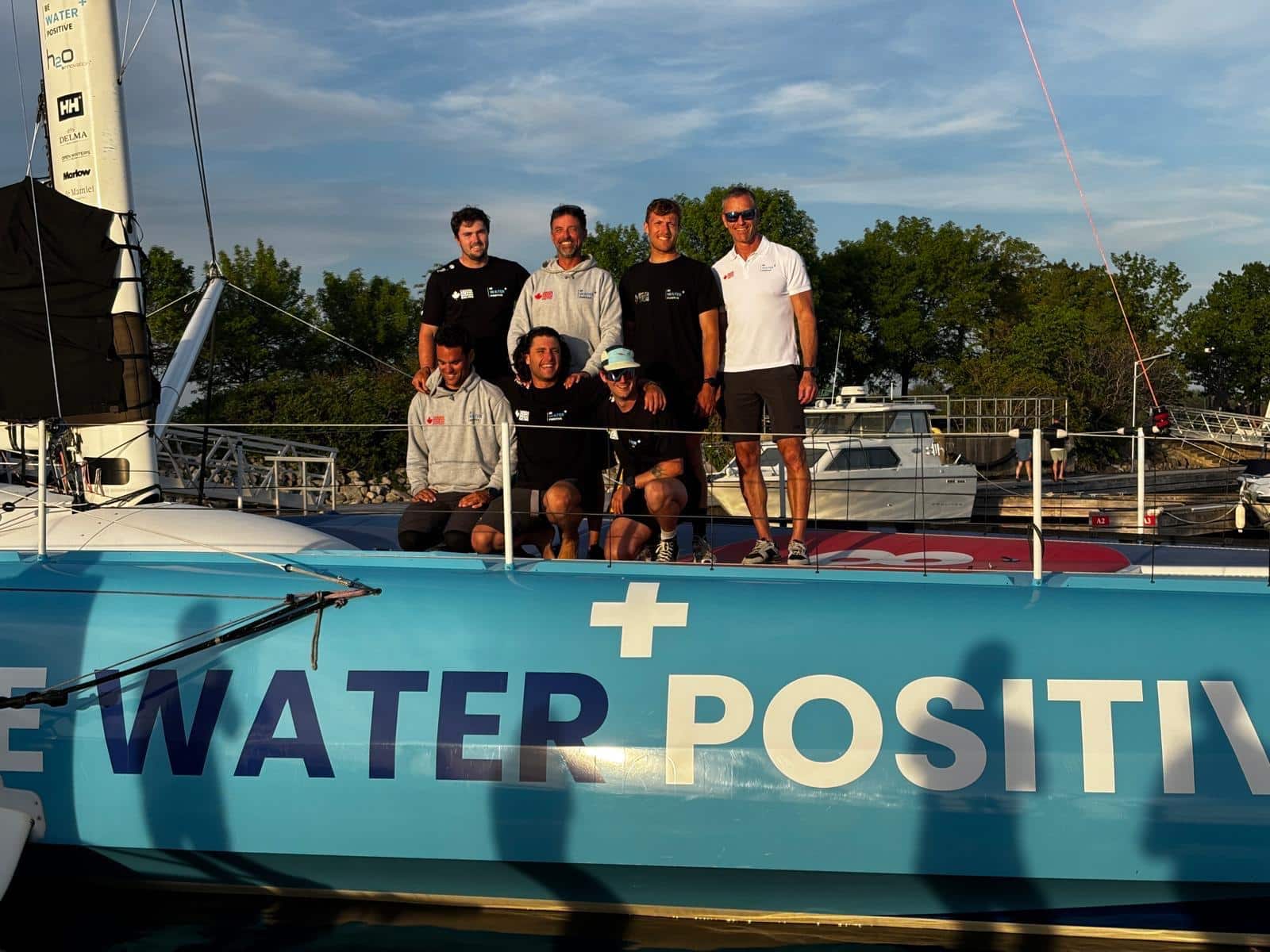
Looking back on the journey so far, what I’m most grateful for is the team.
From the people onboard to those working behind the scenes, it’s taken a huge collective effort to get EMIRA IV to Canada. Logistics, repairs, communications, sponsors, media, planning – there are countless moving parts, and a lot of people have worked incredibly hard to make this happen.
I hope everyone takes a moment to enjoy the achievement.
As for me, the real work is just beginning. The next thing is training.
I have a very detailed training plan that covers everything I want to achieve on the water and on the dock while the boat is here. There are far more items on the list than there is time available, so my job now is to focus on the highest-value activities first.
That’s the reality of any big goal. You don’t do everything at once. You focus on the next thing, and right now, the next thing is learning as much as I possibly can.
As EMIRA IV completes the final stage of her journey and arrives in Collingwood, I’m excited, proud and, if I’m honest, a little nervous too.
There are sailing miles to complete, training objectives to achieve, people to meet and stories to share. I’d love as many Canadians as possible to see the boat, step onboard and learn more about offshore racing. That comes with time pressures, but it’s also a privilege.
This next phase is going to be busy. It’s going to be challenging.
And I think it’s going to be a lot of fun.
– Scott Shawyer, skipper and president, Canada Ocean Racing