


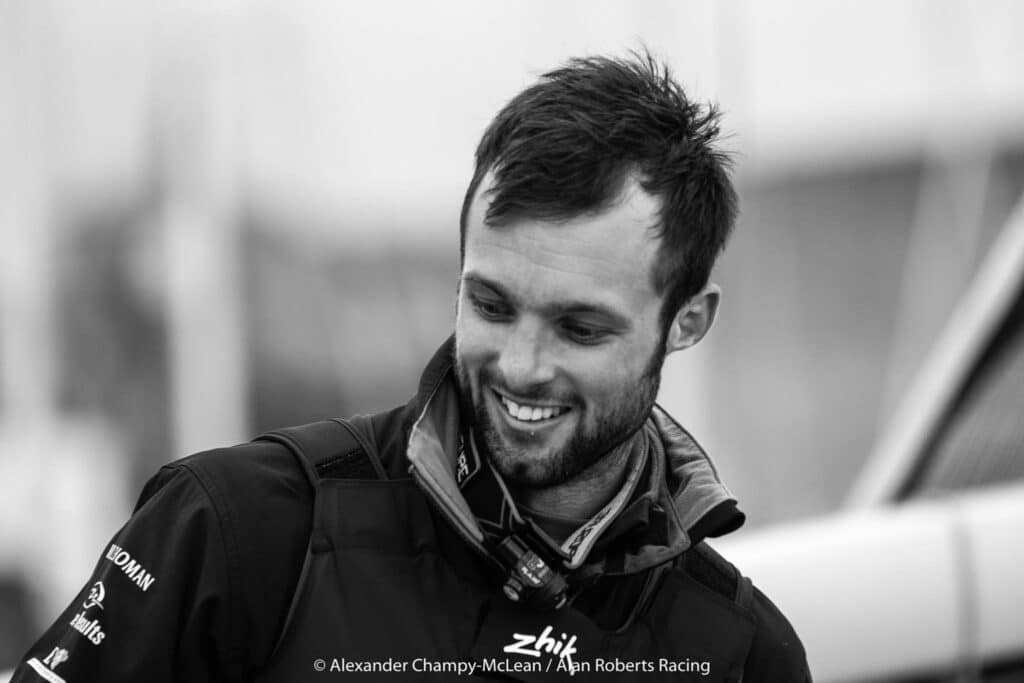
Over the winter, while the boat has been in refit, Scott Shawyer, president and skipper of Canada Ocean Racing, hasn’t stood still.
How do IMOCA sailors prepare for solo racing over winter?
This has been a detailed, hands-on phase of the campaign, just not always in the places you’d expect.
“I’ve basically been learning how to sail the boat… in my living room,” Scott says.
Chairs have become winches. A pillow marks the sail. Step by step, he’s been walking through manoeuvres – tacks, gybes, sail changes – figuring out how to move around the boat as efficiently as possible.
“It’s about streamlining everything. Getting from one side of the boat to the other is a hassle at speed, so I’m trying to make it as repeatable and efficient as possible.”
It might sound unconventional, but there’s a clear purpose behind it. When you’re solo offshore, every movement costs energy and every inefficiency adds up.
Building the foundations
A big part of this winter has been bringing structure to the programme.
Scott has been working closely with coach Alan Roberts, someone he already knows well from previous racing, including the RORC Transat race where they set the record for fastest double-handed crossing together in 2023.
“We’ve been going through everything that can go wrong – disaster prevention, disaster recovery. What do you do? How do you fix it? How do you stop it happening in the first place?”
Training the mind (even when it’s uncomfortable)
Offshore racing is physically demanding and mentally relentless, so Scott has been working with a sports psychologist to better handle the toughest moments at sea.
“I suffer from seasickness, and when that hits, you can’t really do any work, and so you have lots of time to sit in your own head.”
Even the process of figuring out what works has been a learning curve.
“Through this process, I have learned something about myself. When I’m told to ‘go to a happy place’ as a way of distracting myself from the sea sickness, it turns out I can’t actually picture things in my mind. I didn’t realise people could, I always thought it was just a saying. So, we’re having to find other ways to deal with it.”
Setbacks and adaptation
Not everything has gone to plan this winter. A cycling accident in October left Scott with a torn AC joint in his shoulder, an injury that’s still affecting his training.
“I went over the handlebars trying to avoid a friend who had taken a fall… I landed straight on my shoulder. It’s still quite painful, especially on the grinder, so I’ve had to stop grinding and give it space to heal.”
For now, surgery is off the table with key races ahead, so the focus has shifted to rehab and adaptation.
“I’m in pretty good shape overall, doing lots of strength work and cardio, but the shoulder is something I’m still trying to manage.”
Exploring the edge
There’s also been some unexpected innovation happening behind the scenes.
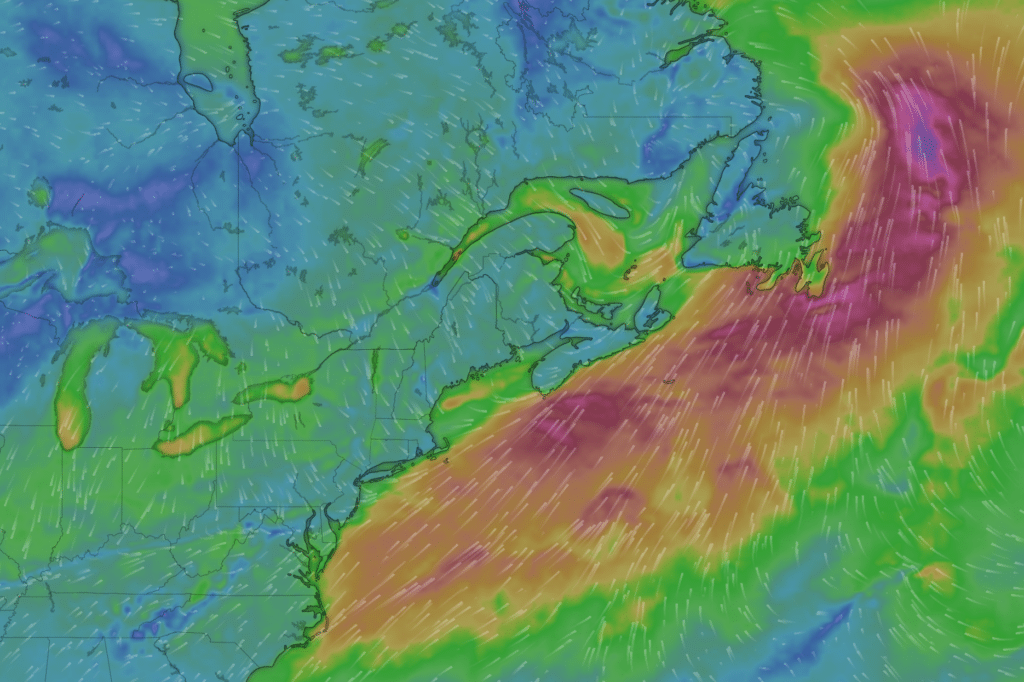
Scott has been working with a contact to explore an AI “co-pilot” for sailing performance, particularly around weather routing.
“The idea is to compare different weather models against real observations over time, so you can see which ones are actually performing best.”
It’s early days, but it reflects a wider mindset: staying curious, testing ideas, and looking for marginal gains wherever they can be found.
—
This winter has been about building skills, systems, and self-awareness.
Now, with the boat about to head out of the shed and back into the water, and a summer of training ahead, everything is coming together. See you in Canada.